


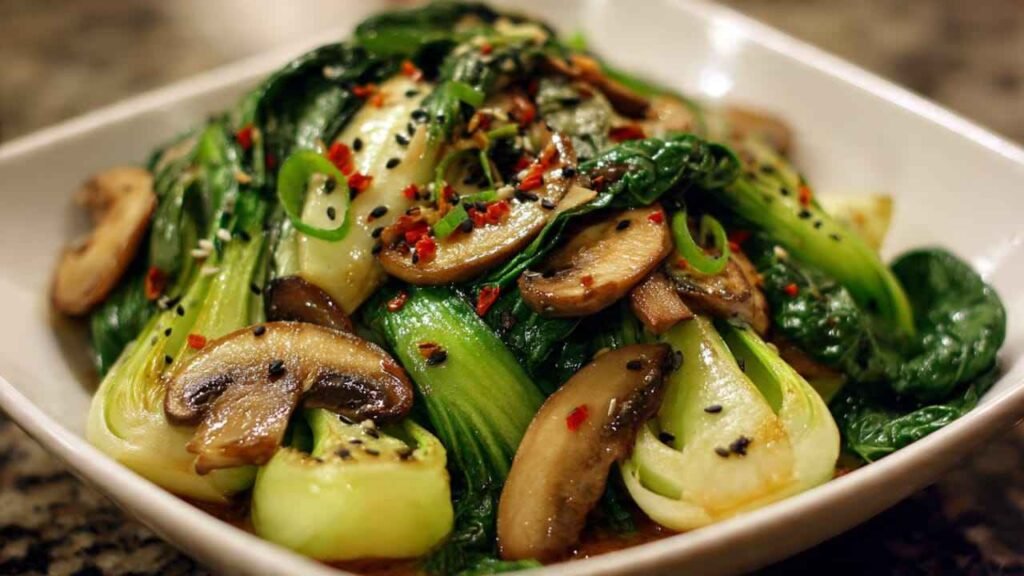
We present Bok Choy and Mushroom Stir Fry as a refined, nutrient-dense dish that combines crisp greens with umami-rich mushrooms in a perfectly balanced, fast-cooked preparation. This dish stands as a cornerstone of modern Asian-inspired home cooking, offering depth of flavor, visual appeal, and impressive nutritional value in one elegant pan. Through careful ingredient selection and precise cooking technique, this stir fry delivers bold taste without heaviness, making it suitable for everyday meals and elevated dining alike.
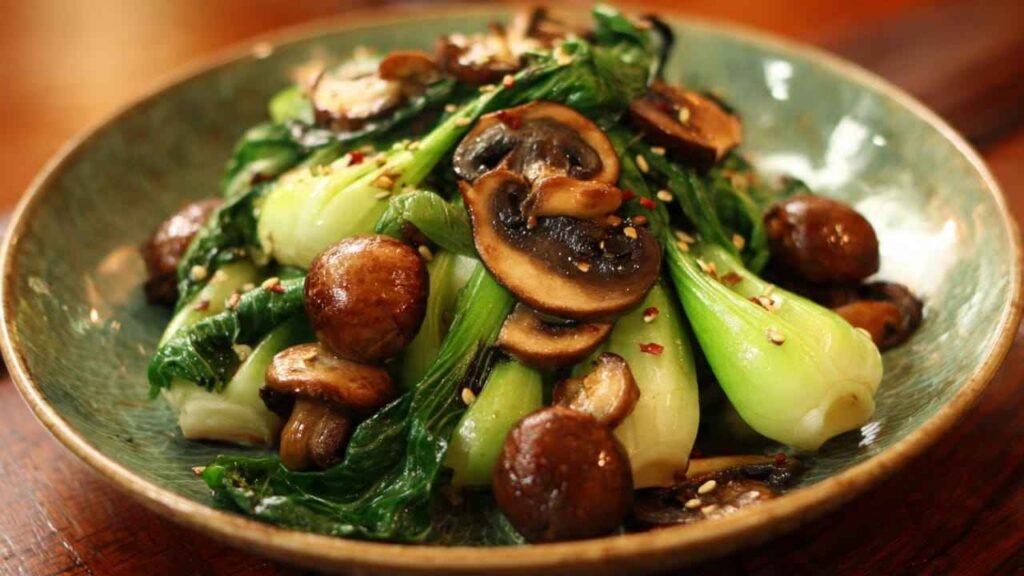

Understanding Bok Choy: Texture, Taste, and Culinary Value
Bok choy, also known as Chinese cabbage, is prized for its dual texture—tender leafy greens and crisp, juicy stalks. Its flavor profile is mild, clean, and slightly sweet, allowing it to absorb sauces while maintaining structural integrity during high-heat cooking. Bok choy cooks quickly, making it ideal for stir fry methods that preserve freshness, color, and nutritional density.
From a culinary perspective, bok choy provides balance. The stalks offer crunch, while the leaves soften into a silky texture, creating contrast that elevates the overall mouthfeel of the dish.
Mushrooms as the Umami Foundation
Mushrooms are the backbone of this stir fry, delivering deep umami, richness, and aromatic complexity. Varieties such as shiitake, cremini, button, or oyster mushrooms each contribute unique characteristics. Shiitake mushrooms bring a meaty chew and earthy depth, while cremini mushrooms offer subtle nuttiness and balance.
When sautéed properly, mushrooms release moisture, concentrate flavor, and develop caramelized edges that anchor the dish with savory intensity. Their natural glutamates enhance the overall flavor without overpowering the delicate bok choy.
Ingredient Selection for Optimal Results
Precision begins with ingredients. For a superior Bok Choy and Mushroom Stir Fry, we recommend:
-
Fresh bok choy, washed thoroughly and cut to separate stalks from leaves
-
High-quality mushrooms, sliced evenly for consistent cooking
-
Neutral cooking oil with a high smoke point, such as avocado or peanut oil
-
Fresh garlic and ginger, finely minced for aromatic depth
-
Low-sodium soy sauce or tamari for seasoning control
-
Sesame oil, used sparingly for finishing aroma
-
Rice vinegar or Shaoxing wine for brightness and balance
Each component plays a defined role, ensuring the final dish is layered, clean, and well-structured.
The Stir Fry Technique: Precision and Timing
Stir frying is defined by high heat, constant motion, and controlled timing. We begin by heating the pan until it is nearly smoking, then add oil to create a slick surface. Aromatics are introduced briefly to bloom fragrance without burning.
Mushrooms enter first, allowing them to sear and release moisture. Once golden and concentrated, bok choy stalks follow, benefiting from direct heat to soften while retaining crunch. The leaves are added last, wilting gently in seconds.
Sauce elements are incorporated quickly, coating ingredients evenly and reducing slightly to cling without pooling. The entire process takes minutes, preserving texture, color, and nutritional integrity.
Flavor Balance and Sauce Composition
The hallmark of an exceptional Bok Choy and Mushroom Stir Fry is balance. Salty, savory, aromatic, and lightly acidic notes must coexist harmoniously. Soy sauce provides salinity and depth, while rice vinegar introduces subtle sharpness. Sesame oil adds warmth and nutty fragrance, used judiciously to avoid dominance.
Optional enhancements such as chili paste, white pepper, or a touch of brown sugar can be introduced to customize intensity, but restraint remains key. The goal is clarity, not complexity overload.
Nutritional Profile and Health Benefits
This dish excels nutritionally. Bok choy is rich in vitamins A, C, and K, along with calcium and antioxidants that support bone health and immune function. Mushrooms contribute B vitamins, selenium, and fiber, supporting energy metabolism and digestive health.
Prepared with minimal oil and fresh ingredients, Bok Choy and Mushroom Stir Fry is naturally low in calories, cholesterol-free, and suitable for plant-based, vegan, and gluten-free diets when paired with tamari.
Serving Suggestions and Pairings
We recommend serving this stir fry immediately while textures are at their peak. It pairs seamlessly with steamed jasmine rice, brown rice, or noodles such as rice noodles or soba. For added protein, tofu, tempeh, or edamame can be incorporated without disrupting balance.
As part of a larger spread, it complements dumplings, miso soup, or light cucumber salads, forming a cohesive, restaurant-quality meal.
Common Mistakes to Avoid
Even simple dishes demand attention. Overcrowding the pan leads to steaming instead of searing. Excess sauce dilutes flavor and texture. Overcooking bok choy dulls color and creates limp results. By maintaining heat discipline and ingredient order, these pitfalls are easily avoided.
Why Bok Choy and Mushroom Stir Fry Endures
This dish endures because it satisfies on every level—speed, nutrition, flavor, and adaptability. It reflects culinary efficiency without sacrificing sophistication. With proper execution, Bok Choy and Mushroom Stir Fry transforms humble vegetables into a polished, crave-worthy experience.
Its versatility allows endless customization while preserving a core identity rooted in freshness and balance. This makes it not only a reliable staple but a dish worthy of repetition and refinement.
Final Thoughts
We consider Bok Choy and Mushroom Stir Fry a masterclass in simplicity executed with intent. Through disciplined technique, thoughtful ingredient selection, and precise seasoning, it achieves depth far beyond its minimal component list. This is vegetable-forward cooking at its finest—clean, bold, and enduring.


