


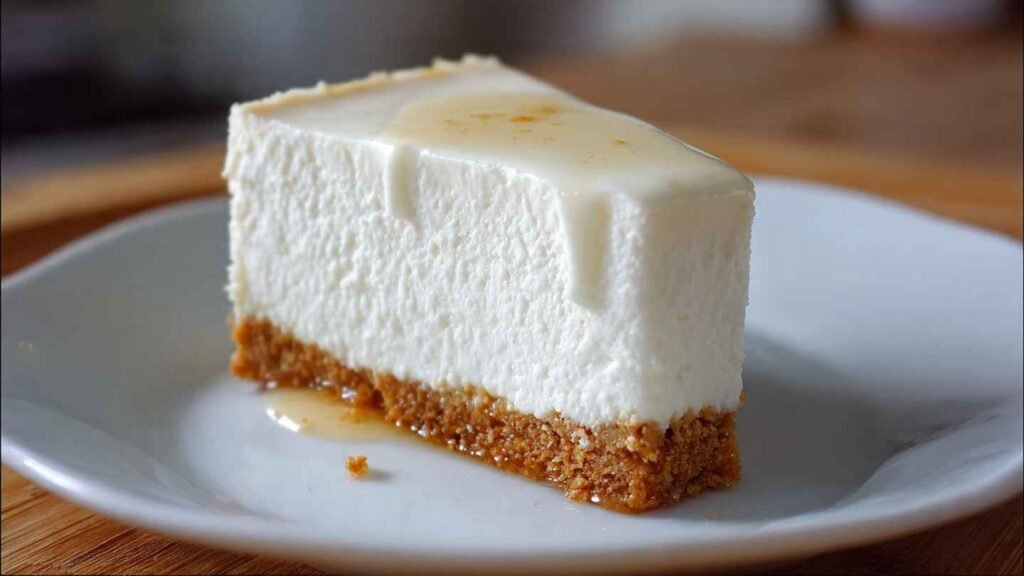
A 2-ingredient yogurt cheesecake is a no-bake or minimal-bake dessert made from Greek yogurt and eggs — no cream cheese, no heavy cream, no crust. You get the creamy, tangy texture of a classic cheesecake in a fraction of the time, with a fraction of the calories. It originated from the Japanese minimalist baking trend and has taken over food blogs worldwide for good reason.
Imagine a cheesecake that’s silky, tangy, and jiggles like a dream — made with just two ingredients you already have in your fridge. No mixer. No cream cheese. No hour-long baking window. This 2-ingredient yogurt cheesecake is the one recipe that genuinely delivers on the “minimal effort, maximum result” promise — because the science behind it actually works.
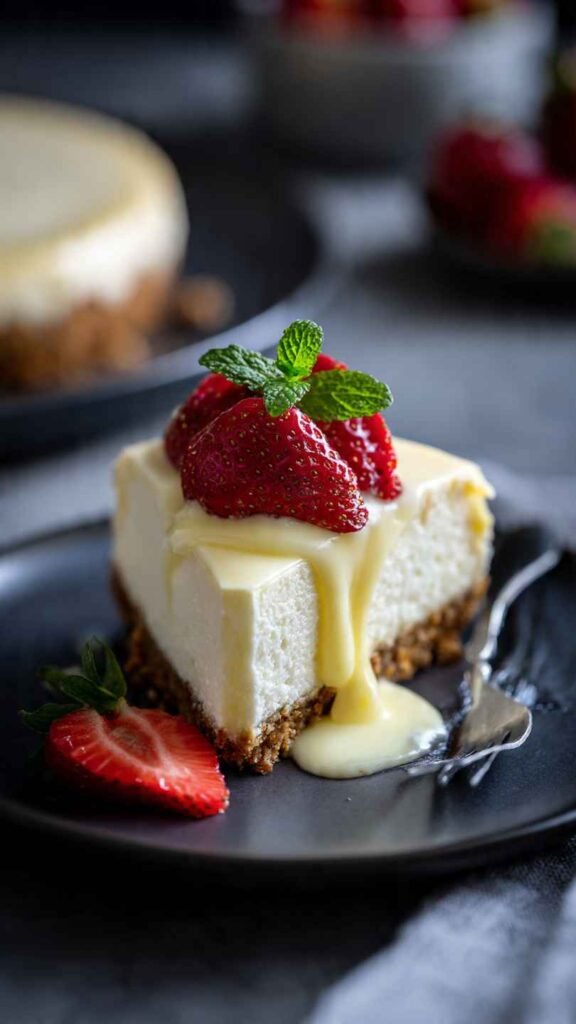

Why This Recipe Works
Greek yogurt is naturally thick because the whey has been strained out, leaving behind concentrated protein and fat. When you combine it with eggs and apply gentle heat, the egg proteins coagulate slowly, forming a soft, custard-like structure that mimics the creaminess of cream cheese.
The key is low and slow heat — baking at 150°C (300°F) prevents the eggs from scrambling and gives you that smooth, wobble-in-the-center texture. Straining your yogurt overnight if it’s not thick enough removes excess moisture, which prevents a soggy, sunken center. Two ingredients. Real chemistry. Real results.
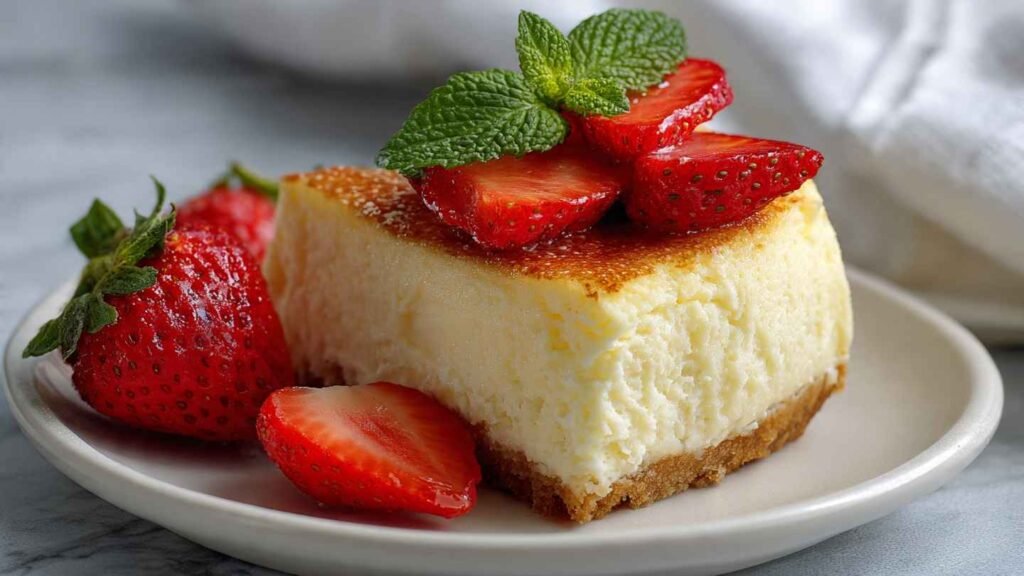

Ingredient Notes
1. Full-Fat Greek Yogurt — 400g (1¾ cups) This is the base and the star. Full-fat Greek yogurt has enough fat content to mimic the richness of cream cheese. Low-fat versions release too much water during baking and collapse. Use yogurt with at least 10% fat content for best results. Sub: Labneh (strained yogurt) works perfectly. Turkish yogurt also works if strained overnight through a cheesecloth.
2. Eggs — 3 large (room temperature) Eggs are the only structure in this recipe. Room temperature eggs blend more smoothly into yogurt, creating an even batter without lumps. Cold eggs cause uneven mixing and can result in a rubbery texture. Sub: No egg substitute works here — eggs are the structural glue. Do not skip or replace.
Step-by-Step Instructions
Step 1 — Preheat and Prepare Your Pan
Preheat your oven to 150°C (300°F). Line a 6-inch round springform pan with parchment paper on the bottom and sides. Lightly grease the sides. Pro Tip: Place a pan of hot water on the oven’s lower rack. This creates steam and prevents cracks on top.
Step 2 — Mix the Batter
In a large bowl, whisk 3 eggs vigorously for 60 seconds until pale and slightly frothy. Add 400g Greek yogurt and whisk until fully combined — the batter should be smooth, thick, and no streaks remain. Pro Tip: Don’t overmix after adding yogurt. Overmixing introduces too much air, causing the cheesecake to puff up and then crack as it cools.
Step 3 — Pour and Tap
Pour the batter into your prepared pan. Tap the pan firmly on the counter 5–6 times to release any air bubbles trapped in the batter. Pro Tip: Run a toothpick or skewer in a zigzag pattern through the batter to pop any remaining bubbles.
Step 4 — Bake
Bake at 150°C (300°F) for 45–50 minutes until the edges are set and slightly golden, but the center still has a gentle wobble — like Jell-O, not like liquid. Pro Tip: Do NOT open the oven for the first 40 minutes. Temperature drops cause sudden sinking.
Step 5 — Cool Slowly
Turn the oven off. Leave the cheesecake inside with the door cracked open for 30 minutes. Then remove and cool at room temperature for 1 hour. Refrigerate for a minimum of 4 hours, ideally overnight. Pro Tip: Cooling slowly is what prevents that ugly crack down the middle. Patience here = perfect texture.
Step 6 — Serve
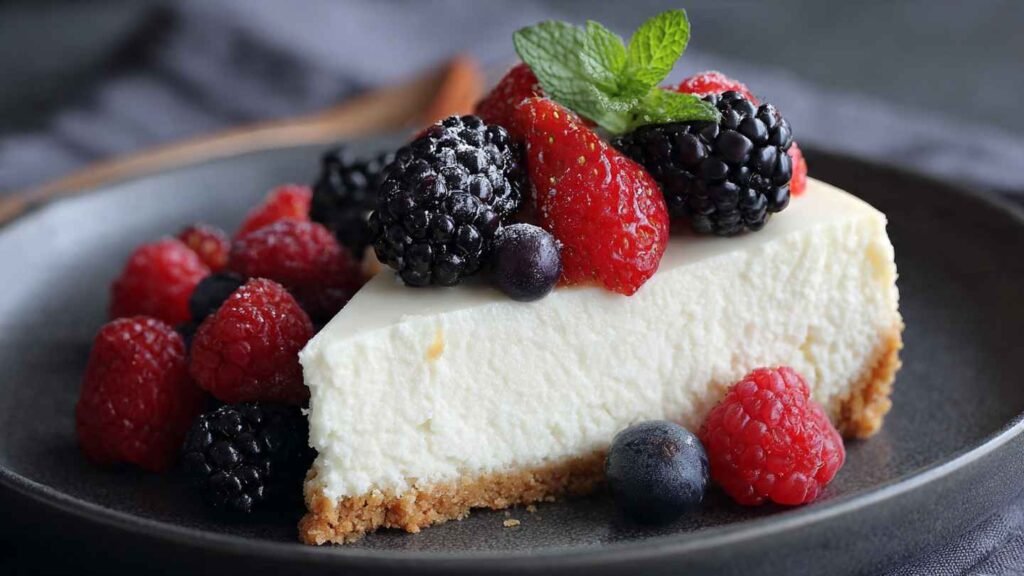
Remove from the springform pan. Slice with a warm knife (run under hot water, wipe dry) for clean cuts. Serve chilled, topped with fresh berries or a drizzle of honey.
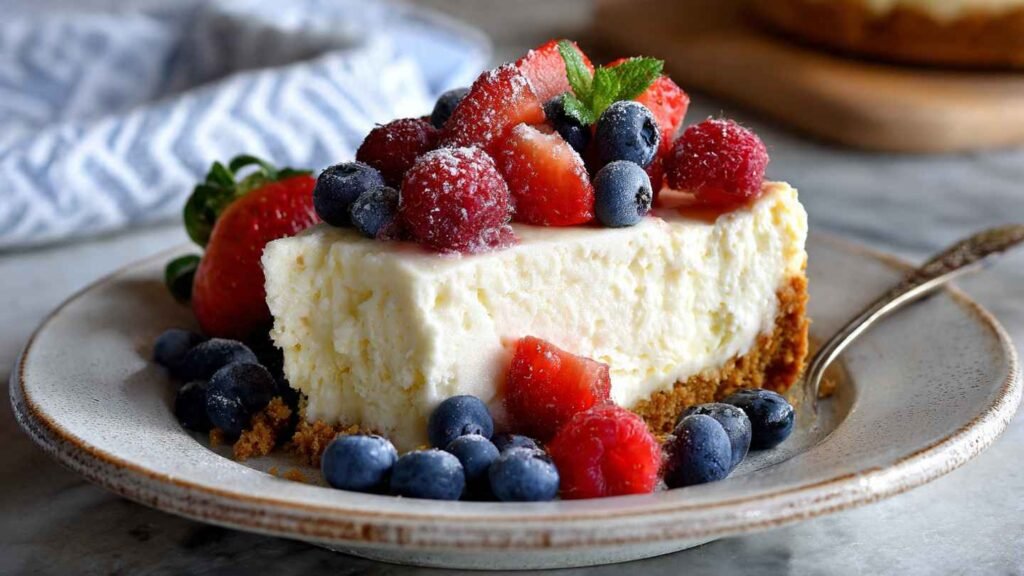
Common Mistakes
1 Using low-fat or regular yogurt
Regular yogurt has too much water content. During baking, that water steams out and leaves a dense, wet, sunken center. Always use full-fat Greek yogurt or strain regular yogurt overnight.
2 Baking at too high a temperature
High heat scrambles the eggs before the yogurt sets, giving you a grainy, curdled texture instead of smooth and creamy. Stay at 150°C (300°F) max — lower and slower is always better for custard-based desserts.
3 Skipping the slow cool-down
Taking the cheesecake straight from a hot oven to a cold counter causes thermal shock — the top contracts rapidly and cracks. Always cool inside the oven with the door open first.
4 Not refrigerating long enough
Cutting into a warm cheesecake gives you a soft, formless slice. The structure fully sets only after 4+ hours of refrigeration. Overnight is ideal.
5 Overmixing the batter
Too much air in the batter means the cheesecake puffs up during baking and collapses when cooled, leaving a sunken, wrinkled top. Mix until just combined.
Nutritional Info — 2-Ingredient Yogurt Cheesecake
(Per slice — based on 6 servings, using full-fat Greek yogurt)
| Nutrient | Per Slice | % Daily Value |
|---|---|---|
| Calories | 108 kcal | 5% |
| Protein | 8.5g | 17% |
| Total Fat | 5.8g | 7% |
| Saturated Fat | 2.1g | 10% |
| Carbohydrates | 4.2g | 1% |
| Sugar | 3.8g | — |
FAQS
How do you make a 2-ingredient cheesecake?
You blend full-fat Greek yogurt with eggs, pour into a lined pan, and bake at low heat (150°C/300°F) for 45–50 minutes. The eggs set the yogurt into a creamy, firm cheesecake texture without any cream cheese or crust needed. Cool slowly and refrigerate for at least 4 hours before serving.
What is the Japanese two-ingredient yogurt cheesecake?
The Japanese 2-ingredient yogurt cheesecake is a minimalist baking trend inspired by Japan’s cotton-soft cheesecake style, made with only Greek yogurt and eggs. Unlike traditional cheesecakes, it has no crust, no sugar, and no cream cheese — the result is a lighter, tangier texture that’s lower in fat and calories. It became viral globally because of how surprisingly good the texture is for such a simple formula.
How to make a cheesecake with yogurt?
Replace cream cheese with full-fat Greek yogurt in a 1:1 ratio for most no-bake recipes, or use the 2-ingredient method (yogurt + eggs) for a baked version. The key is using thick, full-fat yogurt — thin yogurt releases too much water and prevents proper setting. Straining regular yogurt through a cheesecloth overnight achieves the right consistency.
Is cheesecake good for heart patients?
Traditional cheesecake — made with cream cheese, butter, and sugar — is high in saturated fat and not ideal for heart health when eaten regularly. This yogurt-based version is significantly lower in saturated fat and contains probiotics from the yogurt, which may support gut and cardiovascular health. However, heart patients should consult their doctor before making dietary changes, even with lighter dessert options.
Can I make this cheesecake without an oven?
Yes — for a no-bake version, strain Greek yogurt overnight to remove maximum liquid, then mix with gelatin (1 tsp dissolved in 2 tbsp warm water) instead of eggs. Pour into a mold and refrigerate for 6–8 hours. The texture will be softer and more mousse-like rather than a firm, sliceable cheesecake.
Final Thoughts
2-Ingredient Yogurt Cheesecake is proof that simple recipes can still be delicious and satisfying. I love how easy it is to make with just basic ingredients while still giving that creamy dessert feeling.
It’s perfect for anyone who wants a quick, healthy treat without spending too much time in the kitchen. Once you try it, you’ll see how simple it is to enjoy a light and tasty cheesecake anytime.

2-Ingredient Yogurt Cheesecake
Ingredients
- 400 g 1¾ cups full-fat Greek yogurt
- 3 large eggs room temperature
Instructions
- Preheat oven to 150°C (300°F). Line a 6-inch springform pan with parchment paper.
- Whisk eggs for 60 seconds until frothy. Add yogurt and whisk until smooth.
- Pour batter into pan. Tap to remove air bubbles.
- Bake for 45–50 minutes until edges are set, center wobbles gently.
- Turn oven off. Cool in oven with door cracked for 30 minutes.
- Cool at room temperature for 1 hour, then refrigerate for minimum 4 hours.
- Slice with a warm knife and serve chilled.
Notes
- Do not use low-fat yogurt — it will not set properly
- No sugar is added; add honey or stevia if desired
- Water bath in the oven prevents cracking


