

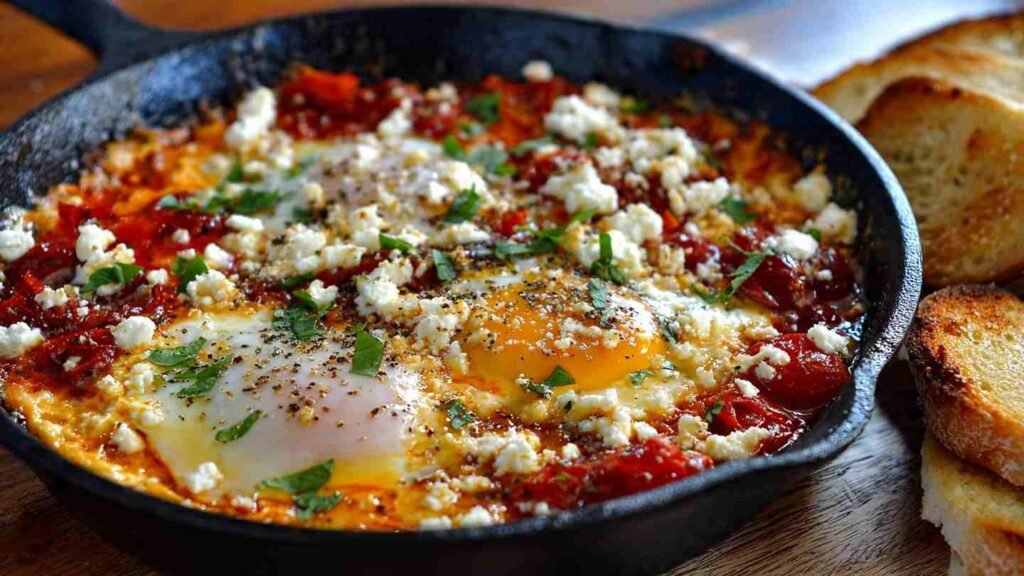
Baked Feta Eggs are a perfect example of how a few simple ingredients can come together to create something deeply satisfying and full of flavor. This dish draws inspiration from Mediterranean cuisine, where feta cheese, fresh vegetables, olive oil, and herbs are staples in everyday cooking. Over the years, baked feta dishes have gained popularity for their simplicity and bold taste, and this egg-based variation has become a favorite for breakfast and brunch lovers.
The first time I prepared baked feta eggs, I was looking for something warm, comforting, and effortless. I wanted a recipe that did not require standing over the stove, and this oven-baked dish delivered exactly that. The feta becomes soft and creamy, blending beautifully with the roasted vegetables, while the eggs bake gently on top, creating a dish that is both hearty and elegant. It is the kind of recipe that feels indulgent yet wholesome, making it ideal for both everyday meals and special occasions.
What truly makes this recipe stand out is its versatility. You can easily adapt it based on what you have in your kitchen, and it consistently delivers delicious results with minimal effort.
Recipe Overview
- Prep Time: 10 minutes
- Cook Time: 25 minutes
- Total Time: 35 minutes
- Difficulty Level: Easy
- Servings: 2 servings
Ingredients List
To prepare baked feta eggs, you will need the following ingredients:
- 200 grams feta cheese (preferably in block form)
- 1 cup cherry tomatoes, halved
- 1/2 red bell pepper, chopped
- 2 cloves garlic, minced
- 2 tablespoons olive oil
- 1/2 teaspoon dried oregano
- 1/2 teaspoon chili flakes (optional)
- Salt and black pepper to taste
- 4 large eggs
- Fresh basil or parsley for garnish
- Toasted bread for serving
Ingredient Notes and Substitutions
Feta cheese is the star of this dish, so choosing a good-quality block will make a noticeable difference in taste and texture. Block feta tends to be creamier and less crumbly compared to pre-crumbled varieties. If feta is not available, goat cheese can be used for a tangier flavor, while ricotta offers a milder and softer alternative.
The vegetables in this recipe can be adjusted based on preference or availability. Cherry tomatoes provide natural sweetness and acidity, but regular tomatoes can also be used. You may add vegetables like spinach, mushrooms, or zucchini to enhance both flavor and nutrition.
Olive oil plays an important role in bringing all the ingredients together. Using extra virgin olive oil will give the dish a richer and more authentic Mediterranean taste.
Step-by-Step Instructions
Step 1: Preheat the Oven
Begin by preheating your oven to 200°C (400°F). This ensures that the vegetables roast properly and the feta softens evenly.
Step 2: Prepare the Vegetable Base
In a medium-sized baking dish, combine the halved cherry tomatoes, chopped red bell pepper, and minced garlic. Drizzle the olive oil over the mixture and sprinkle with dried oregano, chili flakes (if using), salt, and black pepper. Toss everything together until the vegetables are evenly coated.
Step 3: Add the Feta Cheese
Place the block of feta cheese in the center of the baking dish, surrounded by the seasoned vegetables. This positioning allows the feta to soften and blend into the vegetables as it bakes.
Step 4: First Bake
Transfer the dish to the oven and bake for about 15 minutes. During this time, the tomatoes will begin to soften and release their juices, while the feta will become warm and slightly golden on the edges.
Step 5: Add the Eggs
Remove the dish from the oven carefully. Using a spoon, create small spaces in the vegetable and feta mixture. Crack the eggs into these spaces, making sure they are evenly distributed.
Step 6: Final Bake
Return the dish to the oven and bake for an additional 8 to 10 minutes. Keep an eye on the eggs during this stage. The whites should be fully set, while the yolks can remain slightly soft, depending on your preference.
Step 7: Garnish and Serve
Once baked to your liking, remove the dish from the oven. Garnish with freshly chopped basil or parsley. Serve immediately with toasted bread, allowing you to scoop up the creamy feta, roasted vegetables, and eggs together.
Expert Tips and Variations
One of the most important tips for this recipe is to avoid overcooking the eggs. The texture of slightly runny yolks adds richness and enhances the overall dish. If you prefer firmer yolks, you can bake the dish for a few extra minutes, but monitor it closely.
Using a cast iron skillet instead of a baking dish can improve heat distribution and add a rustic presentation. It also keeps the dish warm for longer when serving.
For additional flavor, consider adding spices such as smoked paprika or a Mediterranean herb blend like za’atar. If you want to increase the nutritional value, leafy greens like spinach or kale can be mixed into the vegetable base before baking.
You can also customize the dish with protein additions such as cooked chicken or chickpeas for a more filling meal. Serving it with warm pita bread or flatbread instead of toast provides a different yet equally satisfying experience.
Nutritional Information (Per Serving)
- Calories: Approximately 320 kcal
- Protein: 18 grams
- Carbohydrates: 10 grams
- Fat: 24 grams
Dietary Information
This recipe is vegetarian and naturally low in carbohydrates. It is also gluten-free when served without bread or with gluten-free alternatives.
Storage and Reheating
Storage
Leftovers can be stored in an airtight container in the refrigerator for up to two days. However, the texture of the eggs may change slightly after storage.
Reheating
To reheat, place the dish in an oven at 180°C (350°F) for about 10 minutes or until warmed through. It is best to avoid overheating, as this can cause the eggs to become tough. While microwaving is an option, it should be done carefully and in short intervals.
Frequently Asked Questions
Can I prepare this dish in advance?
Yes, you can prepare the vegetable and feta base ahead of time and store it in the refrigerator. When ready to serve, simply add the eggs and bake.
How can I prevent the eggs from overcooking?
The key is to monitor the dish closely during the final baking stage. Remove it from the oven as soon as the egg whites are set.
Is it necessary to use block feta?
While not strictly necessary, block feta is recommended because it melts more evenly and creates a creamier texture compared to crumbled feta.
What are the best serving options?
Baked feta eggs pair well with toasted bread, pita, flatbread, or even a simple side salad for a more complete meal.
Final Thoughts
Baked Feta Eggs offer a wonderful combination of simplicity, flavor, and versatility. This dish proves that you do not need complicated techniques or a long list of ingredients to create something memorable. Whether you are preparing a quick breakfast, a relaxed brunch, or a light dinner, this recipe delivers consistent and satisfying results.
Once you try it, you will likely find yourself returning to it again and again, experimenting with different ingredients and making it your own.